
Can you heal when you can’t forgive?
Can you heal when you can’t forgive?
When forgiveness isn’t possible
Have you ever been told that forgiveness is essential for healing?
What if you simply can’t forgive?
It’s okay. You can still move forward and make a good life despite what was done to you.
Some things are unforgiveable. And what if the person who harmed you denies the harm, or shows no remorse? Perhaps they’re no longer even alive.
Who does forgiveness really serve?
The problem with forgiveness is that the people who most want you to forgive are often those who have the most to gain. It may be that the person who hurt you doesn’t want to take responsibility for their actions. Perhaps they can’t bear the shame they might then feel, and are not willing (or able?) to mend their ways.
Others who were around at the time may not want to rock the boat or shatter the family myth. If you “forgive”, it becomes easier to brush what happened to you under the carpet, like a dirty secret they don’t want to help clear up. No awkwardness at family gatherings. No need to divorce an abuser. No need to consider whether they should have known, or ought to have protected you. Maybe you’ve heard statements like, “It’s all a long time ago, just move on.”
Forgiveness in these situations tends to serve the person who did harm, and those who failed to prevent it, rather than the person who was harmed. It allows the status quo to continue.
It can also subtly keep you tied to the person who hurt you. By wiping their slate clean, you may pay a further cost yourself, creating a quiet sense of obligation or indebtedness.
The danger of “forgive and forget”
More damaging still is advice to “forgive and forget”. This can mean pretending it didn’t happen, continuing without change, and leaving yourself open to further abuse.
And if you can’t forgive (still less forget), what then? You may find yourself the lone voice telling the truth about a person or situation. Sometimes, instead of the offender being held accountable, the positions are reversed and you are blamed instead.
You may also experience religious pressure to forgive. If you can’t, does that make you the sinner rather than the sinned against?
Religiously pressured forgiveness can become a form of spiritual bypassing: a way of minimising or avoiding the reality of what happened. Healing isn’t possible if what happened cannot be fully recognised.
Forgiveness is not a shortcut to healing. It can become a way of minimising, denying or suppressing very real emotions, and of avoiding the necessary consequences that help protect you from repeated patterns of harm.
Does this sound familiar? It’s an all too common story.
Remember and release
There is good news. Healing is still possible.
Instead of forgive and forget, a more helpful and realistic idea may be remember and release.
To rebuild life after experiencing unforgiveable harm, it’s necessary to understand what happened. You don’t need to remember every detail. In cases of severe abuse, that may not even be possible. But it does matter to take stock and understand the impact.
Many people survive by burying memories or blocking feelings for years. This comes at a cost to both body and mind. You may already notice feelings emerging now that belong to an earlier time. You don’t have to face this alone or unsupported.
Recovery involves gathering and piecing things back together: quite literally re-membering yourself.
Repair, not erasure
Therapy can be like bringing light, fresh air and water to a plant. It creates the conditions for the healing already within you to begin to grow. We can go gently, at a pace that feels right for you. Internal resistances deserve respect; there is wisdom in finding your own rhythm as safety and trust are rebuilt from within.
Over time, the pressure of long-held emotions can ease. You can be freed from the past and live more fully in the present, sometimes even becoming strong precisely where you were once wounded.
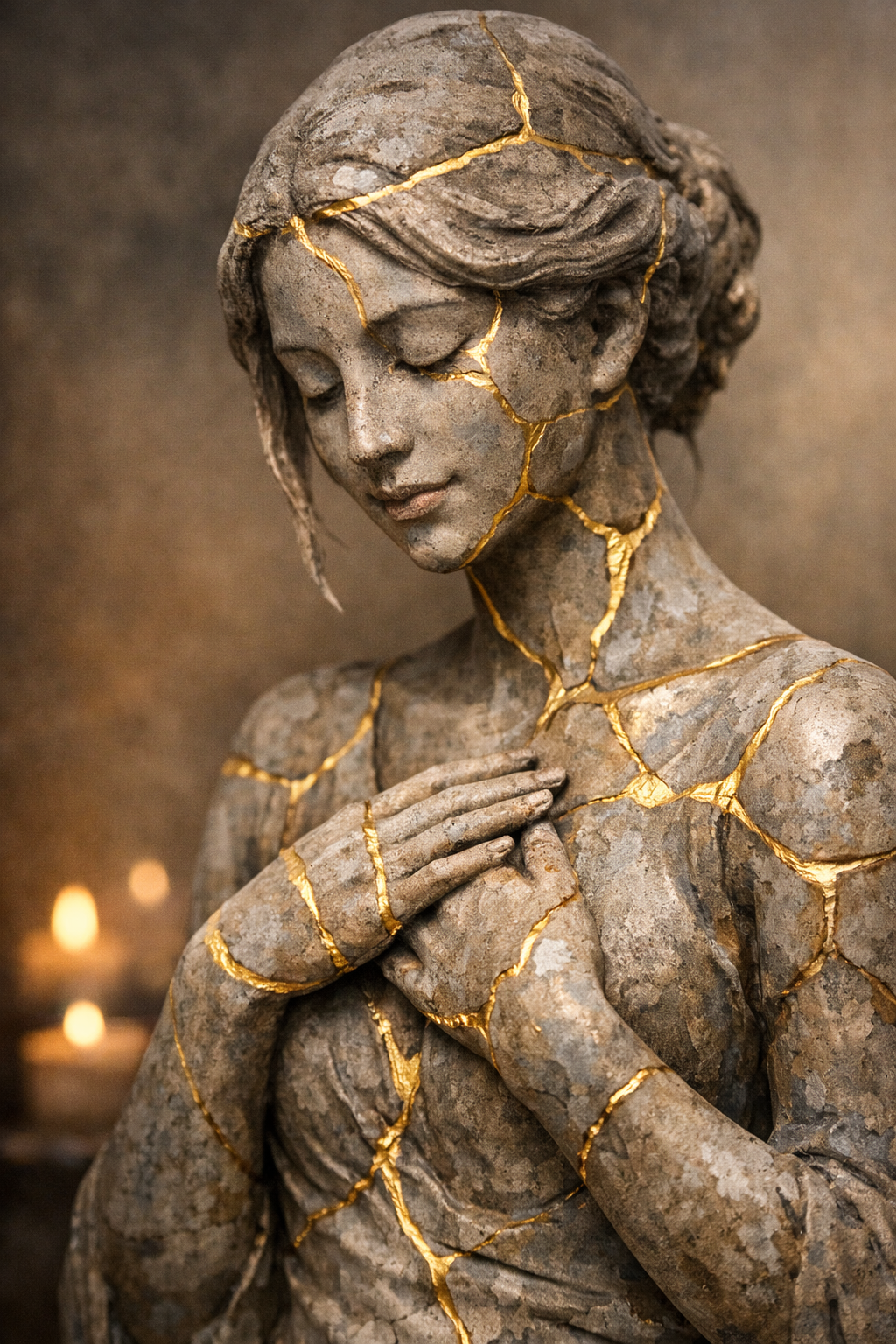
The past isn’t denied. But there can be beauty in healing.
In the Japanese art of kintsugi, what was broken is repaired with gold. The repair is visible rather than hidden. The bowl becomes both resilient and beautiful, not despite what happened, but because of how it was mended.
Recovery takes time. It’s an organic process. But it is possible to calm inner chaos and bring soothing to both mind and body.
So, here’s the truth: you don’t need to forgive (and certainly not forget). But you can remember and release.
It’s easier when you don’t have to do it alone. If what I’ve written resonates with you, let’s chat.
